
Silicone is a material commonly used around the home, notably in the kitchen on the worktop or around a sink, in the bathroom around the bath or shower, and around bay windows or a window.
Sometimes, inadvertently, silicone sealant stains, overflow or blackened silicone need to be removed. So how do you remove a silicone stain?
Here are 4 tips to help you remove silicone cleanly and effectively.
Why remove silicone?
Removing silicone is a crucial step in maintaining the watertightness and aesthetics of your surfaces. Over time, silicone sealant can become porous, crack and lose its original appearance. What’s more, it can harbor mold and fungi that are harmful to health. Removing the old silicone allows you to install a new one, guaranteeing a perfect seal and a brand-new appearance. Whether in the bathroom, around the sink or on other sanitary elements, a well-maintained silicone seal is essential to prevent water infiltration and associated damage.
Silicone removal products
There are several effective products for removing silicone, each with its own advantages and disadvantages. Here are some of the most commonly used products:
- Acetone: This powerful solvent can soften silicone, making it easier to remove. However, it can also damage certain materials, so it’s important to use it with care.
- White vinegar: A natural product that can help remove silicone residues. Although less aggressive than chemicals, it may be less effective on stubborn stains.
- White spirit: A powerful solvent capable of removing traces of silicone. It should be used with care due to its strong odour and irritant potential.
- Dishwashing liquid: A mild product that can help remove silicone residues, especially when used in combination with other methods.
- Special finishing gels: Designed specifically to remove silicone residues, these products are often more effective but can be more expensive.
- Turpentine: Another solvent that can help remove silicone residues, but should be used with caution due to its toxicity.
It’s important to choose the product best suited to your situation and to follow the instructions for use to avoid any damage. Whether you use white vinegar, acetone or washing-up liquid, each method has its own advantages for removing silicone effectively.
How to remove silicone from clothing
A silicone stain on a T-shirt or pair of pants doesn’t have to be a fatality. On the contrary, silicone can be easily removed from textiles. Here are several ways to remove it:
- Use the heat of a hair dryer on the fabric stain to soften the silicone (30 seconds is usually enough with this method). The excess can then be removed from the garment with a teaspoon.
- For garments and fabrics that cannot withstand heat, the silicone can be filed off with a simple nail file or fine sandpaper. Remnants of the silicone stain can then be removed with a clean cloth soaked in a little acetone on the garment.
- Alternatively, place a paper towel over the stain and iron over it. The silicone clings to the paper, leaving the garment intact.
For detailed instructions on how to remove silicone, we recommend consulting a specialized guide.
Removing silicone from tiles or glass
It’s very easy to remove silicone from smooth surfaces such as tiles or glass, as all you need to do is take a blade or razor and scrape the stain.
If any silicone residue remains on the tiles, again simply rub the remaining putty off the glass or tiles with a cloth soaked in acetone or methylated spirits. However, it’s important to note that acetone can damage wooden surfaces, so it’s crucial to use it with care.
Removing silicone from the skin
It’s not uncommon to get a bit of silicone putty on your fingers after DIY work. But don’t panic: our tips make it easy to remove a stain. However, it’s important to remove it as soon as possible, and not to wait more than 24 hours before doing so.
- Remove as much material as possible with paper towels
- .
- Wipe hands with a plastic bag.
- Wash hands thoroughly.
In wet areas such as bathrooms, it’s particularly important to maintain silicone seals to prevent mildew.
If silicone still remains on your fingers, you can heat the material a little with a hair dryer, then finish cleaning with acetone before soaping your hands.
How to remove silicone from bathroom fixtures
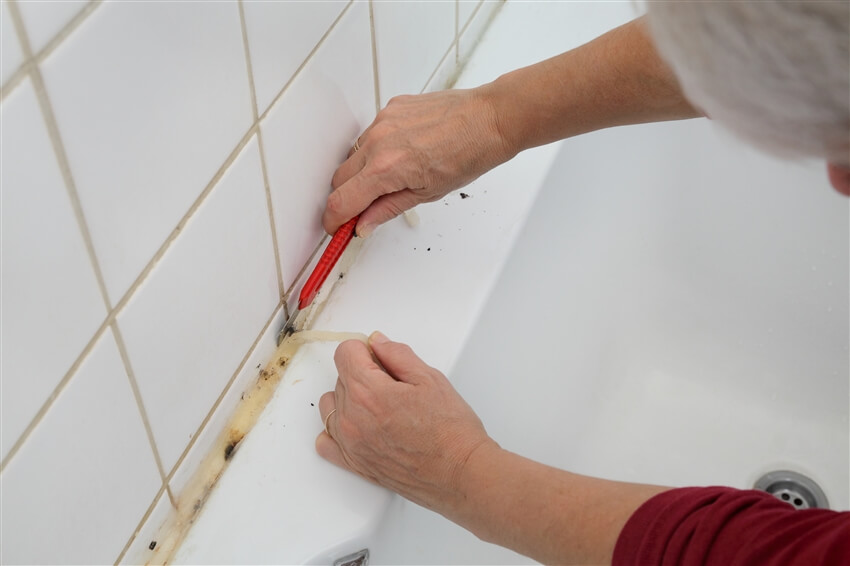
Silicone is an essential material for ensuring a watertight seal around bathroom fixtures, but it can be difficult to remove. To guarantee optimum watertightness around a sanitary unit (sink, bath, shower…), or a kitchen unit such as a hob, for example, it’s important that silicone seals are sound. If they start to blacken, it’s time to remove them before moisture damages your worktop or a wall. Unlike other tips, you’ll need a specific product: white spirit.
To do this, proceed as follows:
- Use a cutter to loosen the joint and scrape away any residue.
- Take a clean cloth soaked in white spirit and rub.
- Clean the surface with washing-up liquid to prepare it for a new application of silicone sealant.
And here are 4 tips for removing silicone!


