Bloodstains are among the most difficult stains to clean. However, there are a number of tricks you can use to get rid of the stains left by hemoglobin. These tips vary depending on the surface. The use of cold water is particularly recommended to dissolve blood without binding it to the fibers.
In any case, removing a trace of blood is not impossible. All it takes is the right method.
How do you effectively remove a bloodstain? Find out in the rest of this article.
Prevention and precautions
When it comes to blood stains, prevention is often the best solution. To avoid having to clean bloodstains, it’s important to take certain precautions on a daily basis. For example, when working with your hands or doing DIY, always wear protective gloves to avoid cuts. Similarly, if you’re prone to nosebleeds, always keep tissues to hand and use nasal sprays to moisturize the mucous membranes.
In the event of bleeding, react quickly to prevent blood from becoming embedded in the tissues. Immediately use absorbent paper to blot up the blood and follow grandma’s tips for effective spot cleaning. Remember, the faster you act, the easier it will be to remove the bloodstain.
Avoid bleach for stain removal
Although often used for its disinfectant properties, bleach is not recommended for cleaning blood stains. It is highly corrosive and can damage fabrics and surfaces. What’s more, bleach can irritate the eyes and respiratory tract, and becomes dangerous when mixed with other cleaners.
To clean a bloodstain, opt for gentler solutions that are just as effective. Cold water, for example, is ideal for preventing the blood from coagulating and becoming further embedded in the fibers. Marseille soap is also an excellent choice for gentle stain removal without damaging fabrics.
When treating a blood stain, dab it with a clean, damp cloth rather than rubbing it. This will prevent the stain from spreading and becoming further embedded. Clean the stain as quickly as possible to prevent it from hardening and becoming more difficult to remove.
In short, to avoid blood stains and clean them effectively, it’s essential to take precautions and use mild products like cold water and Marseille soap. Avoid bleach, and take steps to prevent nosebleeds and cuts.
What are the best practices and products for cleaning a bloodstain?
Injuries, cuts, abrasions, boo-boos, nosebleeds, menstruation and more. Fortunately, there are remedies available for removing dried or fresh bloodstains.
The most important thing in this case is to react quickly and well. To begin with, it’s best to suck up as much blood as possible using an absorbent paper towel. Next, solutions vary according to the surface to be cleaned.
In any case, it’s important never to pour hot water over the bloodstain. This cooks the blood and makes it all the more difficult to clean.
How to remove a bloodstain For your information, here’s a list of some of the typical products used to remove bloodstains:
- White vinegar
- Saline solution
- Cold water with soap
- Cold water with coarse salt
- hydrogen peroxide
- Aspirin
- lemon
- Borax
- Ammonia (use with care, using a mask in a well-ventilated room)
- Flour, talcum powder, cornstarch or any other product containing starch
- Baking soda
How to clean a bloodstain depending on the type of surface?
Here’s how to clean a bloodstain, depending on the type of surface to be treated.
1. Cleaning blood from the floor
Blood stains on carpets and rugs
The best way to remove a bloodstain from a carpet or rug is to use absorbent paper to remove the excess. Then rub the stain with hydrogen peroxide or saline solution.
If this doesn’t work 100%, prepare a mixture of a tablespoon of soda crystals diluted in a little water. Then soak a cloth with the mixture and pat the bloodstain before rinsing thoroughly with cold water.
Tiling
In general, most tiles are non-porous and it’s rare for a bloodstain to become embedded. When it does, apply a little talcum powder, cornstarch or flour to a sponge, then wipe the area clean.
Second option for more stubborn blood stains: soak a cloth in slightly diluted ammonia, then rub the stain before rinsing with a clean sponge.
Linoleum
For linoleum floors, prepare a mixture of water and soda crystals to soak on a cloth. Then rub the stain and wipe dry with a clean cloth.
Parquet
After removing excess blood with absorbent paper, rub the stain with soapy water. Afterwards, rinse with clean water and wipe dry with a clean cloth.
Concrete floor
Raw concrete is a fairly porous floor, so you need to react quickly by absorbing as much blood as possible with a paper towel. Next, use a sponge soaked in soapy water and rub to remove a stain.
If the blood is dry, sprinkle washing powder on the dried blood stain, leave for a few minutes, then scrub with a toothbrush before drying thoroughly.
2. Cleaning blood from fabric
When it comes to staining fabric, sheets or clothing, the best thing to do is to react as quickly as possible. Always start by using absorbent paper to remove as much haemoglobin as possible.
Next, it’s best to leave the stained clothes, sheets or fabric in cold, soapy water (detergent, Marseille soap, black soap) for a few hours as a pre-treatment. It’s not necessarily necessary to use chemicals to remove blood stains from textiles.
The treatment itself for conventional fabrics consists of :
- Rub the stain with the head of a metal wrench or soak a cloth in saline solution and pat the stain.
- Then wash clothes, sheets or tea towels in the washing machine…
For white fabrics :
- Soak stained linen in a bath of bleach or water with Borax for 30 minutes.
- Then machine wash.
For delicate fabrics (wool, silk, etc.)
- For recent stains, apply a mixture of talcum powder or similar product and water to the stain, then allow to dry before machine washing.
- If the stain is old, soak a cloth in hydrogen peroxide and pat the fabric dry before rinsing with cold water.
3. Cleaning blood from leather
When you accidentally stain a leather bag, sofa, jacket or other item, don’t panic and carry out the various cleaning steps carefully to avoid damaging the material.
- First, soak a clean cloth with a little white vinegar and pat the stain.
- Second step: soak a cloth in salt water and gently rub the stain.
- Use a damp cotton pad to remove traces of vinegar and salt.
- Last step: nourish the leather with a suitable moisturizing cream or shoe polish.
Leather is as good as new!
Second option: put a little leather moisturizer and ammonia on a cotton pad and clean the stain. Then rinse.
How to remove a stain from imitation leather:
Imitation leather is easier to care for because it’s a synthetic material. To remove a bloodstain from imitation leather, simply wipe the stained area with soapy water. If necessary, add a few drops of ammonia to the water for the most persistent blood stains.
4. Cleaning blood from marble
Marble is a material that requires specific treatment to remove a bloodstain without damaging it. To do this, you need to :
- Mix polishing powder with a few drops of ammonia.
- Apply the mixture to the stain and leave for a few minutes.
- Wipe off with a smooth sponge.
Caution: never use vinegar or lemon juice on marble, as it may damage the surface.
5. Cleaning blood from wood
On untreated wood
Wipe off blood with a smooth sponge and soapy water. After drying, if the stain persists, lightly sand with fine sandpaper.
On varnished wood
If the blood is still fresh, simply blot the stained surface quickly, then dry with a clean, dry cloth.
On waxed wood
Remove as much blood as possible with absorbent paper, then wipe with a damp, soapy sponge and a few drops of ammonia.
Then lightly sand the surface, wipe off any remaining wood dust, wax and polish. The surface is as good as new.
6. Cleaning blood from porcelain, ceramics or earthenware
It’s easy enough to clean this type of material, even when it comes to blood stains. To do this, use a simple washing-up liquid applied with a cloth, rub in and then rinse with clean water. Another grandmotherly trick that works really well!
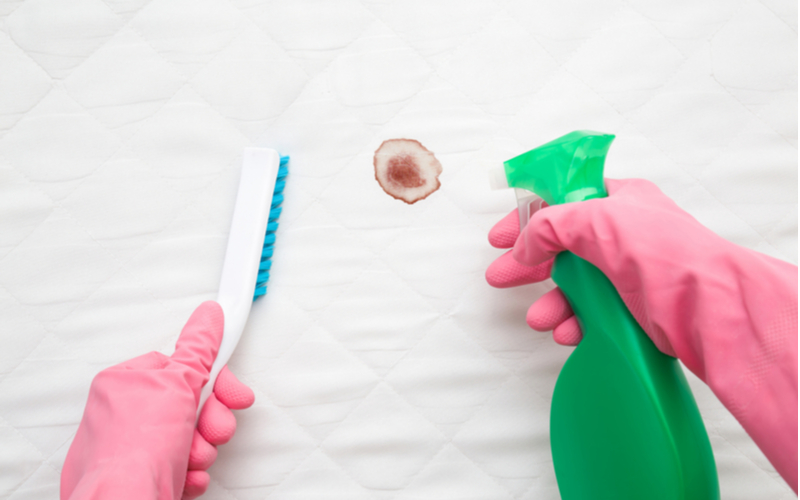
7. Removing a blood stain from a mattress
If you find blood on a mattress, luckily there are ways to get rid of it. Here are the various recipes for cleaning a blood-stained mattress:
- Dab the stain with a damp cloth soaked in rubbing alcohol.
- or Mix flour with water to create a paste. Apply to the bloodstain on the mattress and leave to dry for 1 hour before brushing.
- or Moisten the bloodstain and sprinkle baking soda over it. Allow to dry, then brush the mattress.
- or Dilute a sachet of aspirin in a glass of water and pour over the mattress stain. Leave for half an hour, then clean with soapy water. Leave the mattress to dry in the sun or use a hair dryer.
8. Getting rid of blood stains on terracotta tiles
There are two ways to remove blood stains from terracotta. The first is to soak a cotton pad in hydrogen peroxide and then rub the stain. The second is to soak a cloth in ammonia and dab it onto the stain, then rinse with cold water.
9. How do I remove a blood stain from plastic?
Plastic is generally easy to clean. Simply use soapy water. However, for the most stubborn blood stains, hydrogen peroxide can be used to tap the blood stains before wiping with a dry cloth.