
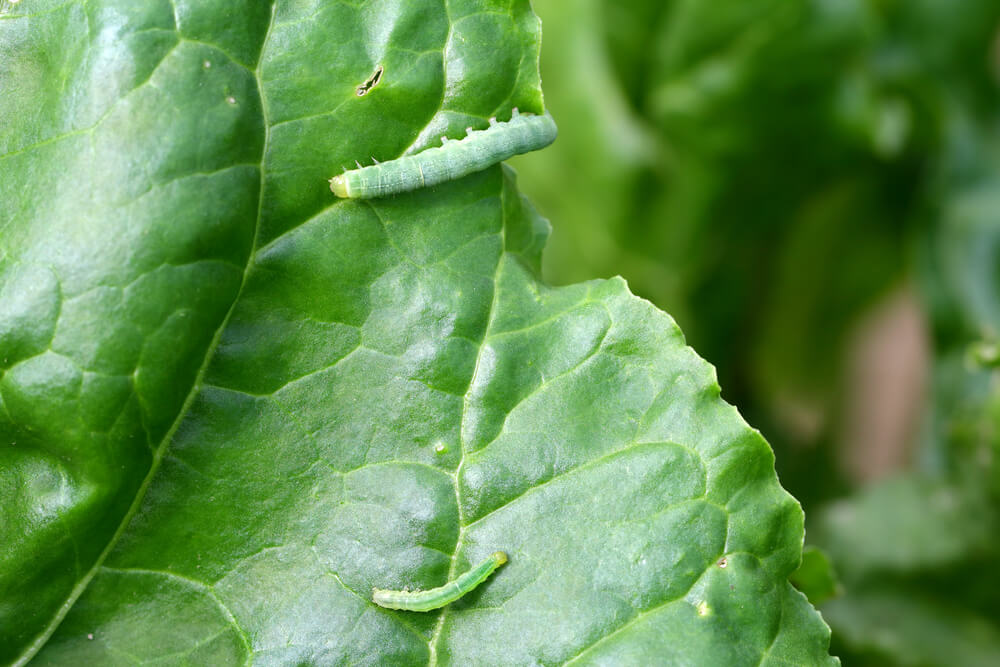
Every year, the same battle is waged with defoliating caterpillars. They appear in early spring and attack the leaves and stems of plants in the garden.
These voracious moth larvae can cause massive damage to gardens. Their favorite plants? Your herbs and fruit trees, of course!
It’s out of the question to let these caterpillars spoil all your work! Fortunately, there are many natural solutions to eliminate them, apart from chemical caterpillar control products.
In focus.
A few words about defoliator caterpillars
Defoliator caterpillars, also known as defoliator moths, are actually the larvae of butterflies. Their main weakness: vegetable garden plants (tomatoes, lettuce, etc.), but also many trees (maple, oak, pine, etc.) in the forest and in your garden, as well as fruit trees, which they love.
If it’s in Spring that you need to be particularly vigilant, it’s because that’s when the adult female moths appear and start laying their eggs. This problem lasts well into the summer, and sometimes even into autumn, according to their life cycle.
Once fertilized, the eggs begin to colonize the leaf surface. They hatch in May and June, and it’s during this period that damage begins to be felt. The small defoliating caterpillars then have free rein to feed on the leaves and propagate to the detriment of the plant on which they have settled.
Some species can produce several generations in a single year. This speed of reproduction makes rapid treatment essential, at the risk of being overrun and seeing your plants perish.
How to detect the presence of defoliator caterpillars?
First of all, it’s important to know that it’s impossible to prevent the appearance of defoliator caterpillars. So your only weapon is to detect their presence as early as possible, in order to treat your garden effectively. Even crops grown in greenhouses and shelters are affected.
Your job is to recognize the larvae and get rid of them. They are visible to the naked eye and feed mainly on leaves and buds. Fruits are not spared either, and the larvae are capable of creating galleries that accelerate the ripening and rotting process, rendering them unfit for consumption. That’s the place to look. You can also spot the silk webs they use as shelter.
It’s important to note that an invasion of defoliating caterpillars can be fatal, even to a tree. They can weaken a plant to the point of death.
Beware: there are several types of defoliator caterpillar, which can be of different colors depending on the case: white, orange, black, gray, red, green and even brown.
How can I get rid of defoliator caterpillars?

There are several ways to get rid of defoliating moths. However, the sooner you deal with the problem as soon as it arrives, the better your chances of getting rid of it.
First of all, it’s important to carry out two essential steps: firstly, cut off all affected, contaminated or nesting parts using pruning shears. Then burn the whole thing separately, in a safe way, of course.
If you’re looking for a less radical alternative, there are several solutions to keep defoliating caterpillars out of your garden. Here are a few of the most effective:
1 – Soapy water
Soapy water is a highly effective repellent, capable of dislodging defoliator caterpillars from your outdoors. To use this trick, simply fill a spray bottle with water and washing-up liquid. After mixing well, simply spray all infested plants. The operation can be repeated several times until the caterpillars have completely disappeared.
2 – Diluted vinegar
Vinegar diluted in water is also a highly effective solution for eliminating defoliating moths. It’s a natural repellent that’s very easy to make at home. Simply mix a dose of water with a dose of vinegar and place in a spray bottle. The solution should then be applied to the base of the plants to be treated. As well as eliminating defoliators, you’ll also get rid of other problematic pests such as slugs.
3 – Elder leaves
Elder leaves are reputed to scare off defoliator caterpillars. To use this trick, make an infusion of elder leaves by boiling them in a saucepan.
Once the mixture has cooled, simply place in a spray bottle and use directly on infested foliage.
4 – Coffee grounds
Coffee grounds are a 100% natural product that scares off defoliating moths thanks to its scent. As well as keeping these pests at bay, this trick is also highly effective against aphids and slugs, which can cause the same kind of damage in gardens.
Coffee grounds can be used undiluted. Simply place it at the base of plants and you’ll see fast, effective results.
Please note: this tip can only be used from April to September, so as not to disrupt pollinating insects such as bees and bumblebees.
5 – Garlic
A decoction of garlic cloves is also very effective for chasing defoliating caterpillars out of your garden. Simply boil 2 liters of water (or more, depending on your needs) and add 100 g of garlic.
Leave to infuse for 30 minutes and wait until completely cooled before spraying directly onto infested plants.
6 – Diatomaceous earth
Diatomaceous earth is a highly effective natural insecticide that can be used in the garden to eliminate defoliating caterpillars, according to the manufacturer’s recommendations.
7 – Baccillus Thurengiensis
Baccillus Thurengiensis is a bacterium renowned for its insecticidal properties. It’s a very interesting solution for killing defoliators without causing problems for beneficial insects.
To use it, it’s vital to follow the instructions on the packet to the letter. It can then be sprayed directly onto compromised plants.
Note that this product is only effective on larvae, not on adult moths.